

aDigi's history – from repro to digital printing since 1991
The aDigi story began in Helsinki in 1991 under the name ZX Repro Oy. Since then, the printing industry has changed almost completely: from film and repro cameras to PDF artwork, digital printing, large-format printing and online ordering. The company has evolved with the technology for more than three decades.
It all started in the middle of Finland's 1990s recession
The aDigi story began in 1991. Pasi Puhakka's employer at the time closed down, leaving him with two options: find another job or start a company of his own.
Pasi bought production equipment from his former employer and founded ZX Repro Oy on 5 August 1991. The printing industry was already familiar to him: Pasi had trained in prepress production, and printing also had a background in the family.
The company was therefore founded at a time when Finland's economic situation was anything but easy. Even so, it marked the beginning of a business that is still operating 35 years later.
“Someone had to pay the instalments on the motorcycle.”Pasi Puhakka on becoming an entrepreneur
Repro cameras, film and surgical knives
In 1991, print artwork was not sent as a PDF file and a print job could not be prepared with a few clicks of a mouse. Preparing printing plates and artwork was largely manual work.
In colour production, films were made for the different printing colours and the colour separations had to be aligned precisely. The tools of the trade included repro cameras, exposure frames and surgical knives.
Producing a single colour proof could take hours. Today's digital workflow makes many comparable stages almost instantaneous.
Films, originals and proofs were physical parts of the production process.
Preparing printing surfaces, alignment and corrections were largely done by hand.
Stages that now happen almost instantly could once require hours of work.
A piece of aDigi history
Changes in the printing industry can be seen not only in the machinery, but also in how the business has operated over the decades. This old newspaper article captures one period in aDigi's history.
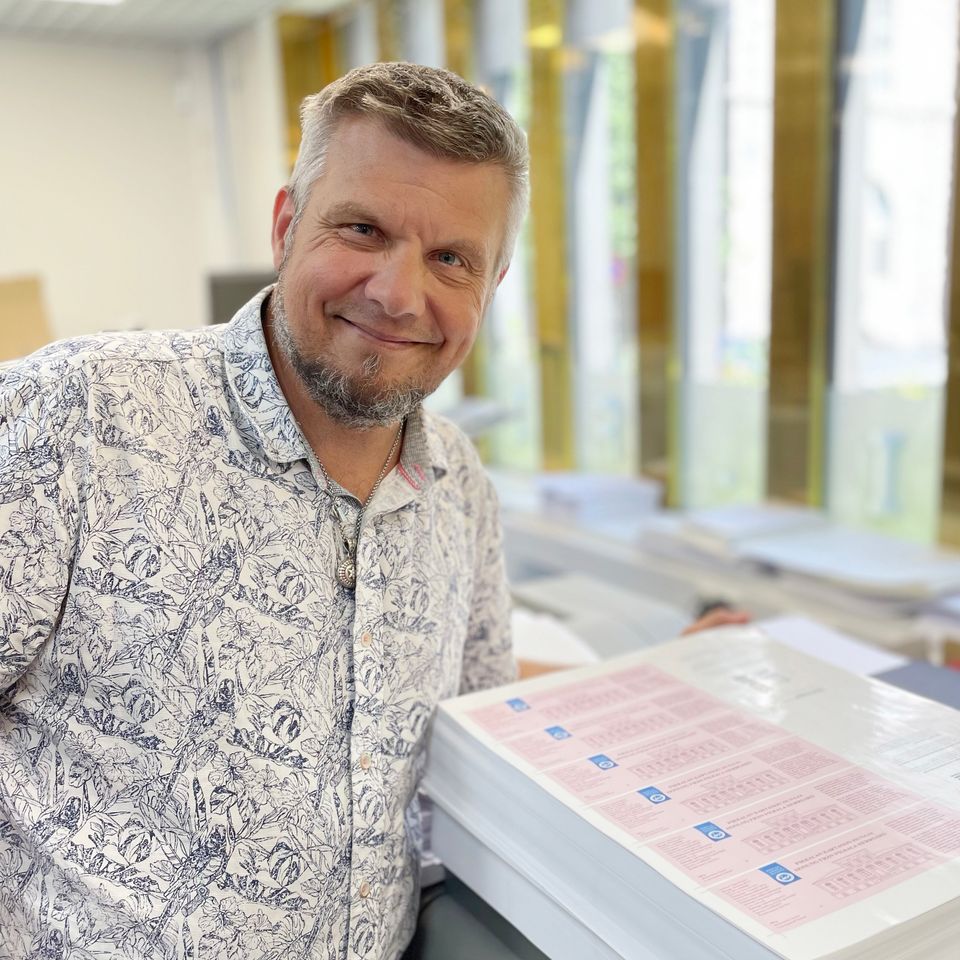
The first colour copier changed the direction
In 1998, the company acquired its first colour copier. It was one of the first visible steps towards digital production.
Computers, digital artwork and printing technology developed rapidly. At the same time, traditional repro work declined and digital printing became increasingly important.
Eventually, the name ZX Repro no longer described what the company actually did. The company became aDigi – a Helsinki printing house specialising in digital printing.
The same industry – completely different tools
Print production before digitalisation
- Repro cameras and film
- Exposure frames
- Manual alignment of colour separations
- Physical originals and proofs
- Surgical knives among the tools of the trade
- Several manual production stages
Digital print production
- PDF artwork directly into production
- Modern digital printing
- UV and large-format printing
- Short print runs produced efficiently
- Fast reprints
- Online ordering and a digital workflow
The change is not simply about replacing old machines with new ones. Digitalisation also changed which kinds of print jobs make practical and economic sense.
In the past, setup and preparation accounted for a large part of the cost of a print job. With digital production, even runs of tens or hundreds of copies can be produced efficiently. Another batch can be printed later without having to order everything at once and keep it in storage.
aDigi's history in brief
ZX Repro Oy is founded
The company begins operations on 5 August 1991, specialising in traditional repro and prepress production.
The first colour copier
Digital colour production begins to grow alongside traditional repro work.
From repro to digital printing
Digital printing grows rapidly and fundamentally changes the company's production. ZX Repro becomes aDigi.
The digital workflow expands
Print artwork, ordering and production processes move increasingly into a digital environment.
Digital and large-format printing
Alongside digital paper printing, the product range includes UV printing, stickers, posters and large-format products.
35 years in business
Machines, software and products have changed many times. The company continues to operate in Helsinki.
What does 35 years of experience actually mean?
A long history can easily become just a marketing phrase, but in the printing industry it also has practical value. Over the decades, we have worked with many different papers, machines, printing methods, artwork files and applications.
Technology solves many problems today, but not every problem is technical. Sometimes the right solution is to change the paper, adjust the size, make a fold differently or choose an entirely different production method.
Experience does not mean doing things the way they were done in the past. It should mean knowing what is still worth doing the traditional way and what is better done in a completely new way.
Paper thickness, surface and intended use affect the result more than the product name alone.
The same print product can sometimes be produced in several different ways. The best method depends on quantity, size and schedule.
Not every print job fits neatly into a standard online-store option. That is where experience is particularly useful.
“The world is becoming digital, but there is still a need for print”
In 2021, an STT Info release marking 30 years of entrepreneurship at aDigi was published under the headline “The world is becoming digital, but there is still a need for print.” The idea still describes the printing industry well today.
Not everything needs to be printed, but physical products still have a clear purpose: a leaflet can be handed to someone, a poster is visible in a space, a card stays with the customer and a magazine can be read without a screen.
Digitalisation did not eliminate printing. It changed what is worth printing, how much should be printed and how quickly it can be produced.
Technology changes. The fundamentals of a good printing house do not.
In 1991, there were no PDF print files, online print shops or modern digital printing presses. Almost everything in production has changed since then.
One basic principle, however, has remained the same: do the job properly, keep to the agreed schedule and tell the customer if something needs to be corrected before printing.
This page tells our history. To see what aDigi does today, which print products we produce and how ordering works, continue to the aDigi Print House page.